Maya R.
The 5-minute quiz nailed exactly what I needed. The learning experience finally made the ideas stick.
Erica Frydenberg, Janice Deans & Rachel Liang
Promoting Well-Being in the Pre-School Years provides evidence-based research and real-life strategies that support social and emotional development and well-being for children aged 3–5 years. It places emphasis on nurturing social emotional competence through purposeful scaffolding activities and how these can be used by children and families to create a harmonious platform for building resilience and positive relationships with family and the community. Drawing on principles from Positive Psychology and Positive Education, it is illustrated throughout with examples of sustainable practice in diverse, global settings. Key topics explored include: Contemporary well-being concepts, including ‘grit’, ‘growth mindset’ and ‘gratitude’, as well as ‘classic’ constructs such as coping and self-efficacy The attitudes and skills that need to be developed to ensure that young children flourish Cognitive and sociocultural perspectives complemented by neuroscience and epigenetics Social Emotional Learning (SEL) in the early years curriculum Using visual tools – the Early Years Coping Cards How we measure young children’s coping The relationship between coping, stress and mental health Recognition of the importance of parents’ own coping skills How partnerships with communities can improve children’s SEL. Promoting Well-Being in the Pre-School Years shows how we can support young children to develop an understanding of what it means to be happy and to flourish as a socially responsible member of the family and wider community. It is essential reading for teachers, parents and professionals who work with young children, as well as academics in child development.
Maya R.
The 5-minute quiz nailed exactly what I needed. The learning experience finally made the ideas stick.
James T.
I never finish books. Memrbl turned this one into a lesson I actually completed on my commute.
Aisha K.
Loved how personal it felt, like it knew which parts I'd struggle with before I did.
Daniel O.
Better than any summary app. The questions made me think instead of just skim.
Sophie L.
Took the quiz, got my course, and remembered more in a day than a week of reading.
Marcus B.
The personalization is real. My learning experience felt built for me, not copy-pasted.
Lena M.
Quick, clear, and surprisingly deep. Perfect for busy mornings.
Carlos V.
Finally a learning app that respects my time. Five minutes in and I was hooked.
Priya S.
I use it for every book now. The recall actually lasts.
Tom H.
Skeptical at first, but the tailored lessons changed how I read nonfiction.
Nina A.
Beautiful, simple, and it just works. My friends are all switching over.
Ethan W.
The quiz felt like a conversation and the learning experience felt like a tutor who knew me.
There are 3,000,000+ books on MEMRBL. Take any one as a personalized, interactive course.
Search the catalog✨ Take a 5-min quiz to personalize your learning experience
There are 3,000,000+ books on MEMRBL. Take any one as a personalized, interactive course.
Search the catalogA Corpus Linguistic Approach to Analyzing "Empathy"
Sabrina Fusari
Building Empathy in Children through Community Connections
Erica Frydenberg, Janice Deans & Rachel Liang
The Art of Public Speaking
Dale Carnegie & Wyatt North
The F*ck It Diet
Caroline Dooner
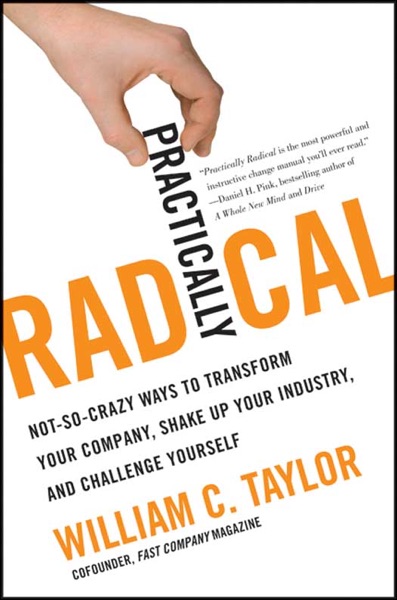
Practically Radical
William C. Taylor
Rosemary
Kate Clifford Larson
Corpus Linguistic Approaches to Deception Detection
Mathew Gillings
The Unstuck Brain: How to Advocate for Your Child with Autism, ADHD, or a Learning Disability at School
ABHIJEET SARKAR
The Answer is a Question: The Missing Superpower that Changes Everything and Will Transform Your Impact as a Manager and Leader
Laura Ashley-Timms
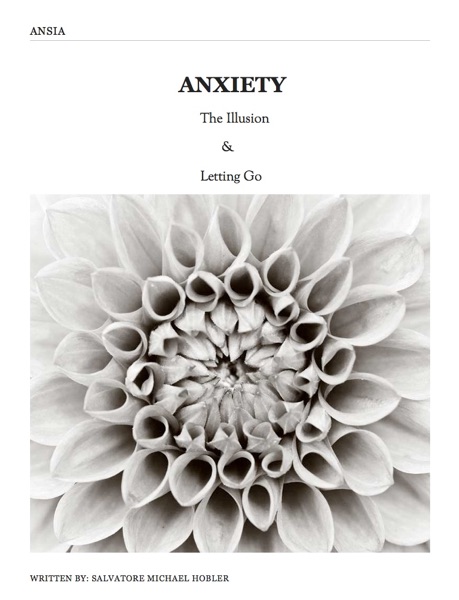
Anxiety: The Illusion and Letting Go
Salvatore Michael Hobler
Healthy Brain, Happy Life
Wendy Suzuki & Billie Fitzpatrick
Brain Lock
Jeffrey M. Schwartz