Maya R.
The 5-minute quiz nailed exactly what I needed. The learning experience finally made the ideas stick.
Jane Austen
The Author There was nothing of the literary woman in the external affairs of her life and its conduct. Born on 16 December, 1775, at Steventon in Hampshire, of which her father was rector, she passed the intervening years almost entirely in the country. She lived with her family in Bath from 1801 to 1806, and at Southampton from 1806 to 1809. Later, she paid occasional visits to London where she went not a little to the play; but she never moved in “literary circles,” was never “lionised” and never drew much advantage from personal contact with other people of intellect. From 1811 until 1816, with the release of Sense and Sensibility (1811), Pride and Prejudice (1813), Mansfield Park (1814) and Emma (1816), she achieved success as a published writer. She wrote three additional novels, Lady Susan, Northanger Abbey and Persuasion, all published posthumously, and began a fourth, which was eventually titled Sanditon. Austen died in Winchester on 18 July 1817, at the age of 41, before completing it. The Tales Love and Freindship is a juvenile story by Jane Austen, dated 1790. From the age of eleven until she was eighteen, Jane Austen wrote her tales in three notebooks. The notebooks still exist – one in the Bodleian Library; the other two in the British Museum. They include among others Love and Freindship. Virigina Woolf called it "Spirited, easy, full of fun, verging with freedom upon sheer nonsense — Love and Freindship is all that; but what is this note which never merges in the rest, which sounds distinctly and penetratingly all through the volume? It is the sound of laughter. The girl of fifteen is laughing, in her corner, at the world." Lesley Castle is an unfinished novel by the sixteen year old Jane Austen. It consists of eleven letters and is a part of Austen’s Juvenilia, written throughout her teen years mostly for the entertainment of her family. Written with characteristic humour, the letters contain amusing scenes, clever characterisation and sharp wit. The voices of the letters are distinct and the purpose of their creator satiric. Sub-plots abound: an adulterous elopement, an abandoned child, divorce and remarriage, a bridegroom’s fatal riding accident just before his wedding and the problems of step-families. Reviews Zona Gale, New York Times Book Reviews, 1922 — Henceforth it is a part of literary experience to have read Jane Austen's Love and Freindship written when she was 17. First, the joy of it. For the return of zest. For the forgotten faculty to ripple with inward laughter. Next for the love of Jane. We have admired her and she has amused us; but have we ever loved her? Ever called her Jane? And third, for the fun of shaking those leaves of hers before English literature classes. Virginia Woolf: Jane Austen, The Common Reader 1925 - Jane Austen was the authoress of an astonishing and unchildish story, Love and Freindship, which, incredible though it appears, was written at the age of fifteen. It was written, apparently, to amuse the schoolroom; one of the stories in the same book is dedicated with mock solemnity to her brother; another is neatly illustrated with water-colour heads by her sister. These are jokes which, one feels, were family property; thrusts of satire, which went home because all little Austens made mock in common of fine ladies who “sighed and fainted on the sofa”.
Maya R.
The 5-minute quiz nailed exactly what I needed. The learning experience finally made the ideas stick.
James T.
I never finish books. Memrbl turned this one into a lesson I actually completed on my commute.
Aisha K.
Loved how personal it felt, like it knew which parts I'd struggle with before I did.
Daniel O.
Better than any summary app. The questions made me think instead of just skim.
Sophie L.
Took the quiz, got my course, and remembered more in a day than a week of reading.
Marcus B.
The personalization is real. My learning experience felt built for me, not copy-pasted.
Lena M.
Quick, clear, and surprisingly deep. Perfect for busy mornings.
Carlos V.
Finally a learning app that respects my time. Five minutes in and I was hooked.
Priya S.
I use it for every book now. The recall actually lasts.
Tom H.
Skeptical at first, but the tailored lessons changed how I read nonfiction.
Nina A.
Beautiful, simple, and it just works. My friends are all switching over.
Ethan W.
The quiz felt like a conversation and the learning experience felt like a tutor who knew me.
There are 3,000,000+ books on MEMRBL. Take any one as a personalized, interactive course.
Search the catalog✨ Take a 5-min quiz to personalize your learning experience
There are 3,000,000+ books on MEMRBL. Take any one as a personalized, interactive course.
Search the catalogDavid Copperfield
Charles Dickens
White Nights
Fyodor Dostoyevsky
The Old Man and the Sea
Ernest Hemingway
The Pearl
John Steinbeck
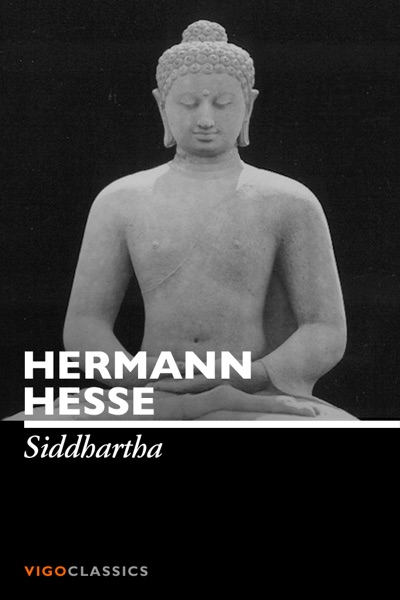
Siddhartha
Hermann Hesse
100 Classic Books
Jane Austen, F. Scott Fitzgerald, Charlotte Brontë, William Shakespeare, Lewis Carroll, Louisa May Alcott, John Steinbeck, Emily Bronte, Mark Twain, Oscar Wilde, Victor Hugo, Fyodor Dostoyevsky, Frances Hodgson Burnett, Charles Dickens, L.M. Montgomery, A. A. Milne, Alexandre Dumas, Leo Tolstoy, Kurt Vonnegut, Nathaniel Hawthorne, Mary Shelley, Elizabeth Gaskell, Anna Sewell, Hermann Hesse, Miguel de Cervantes, Herman Melville, Bram Stoker, Lyman Frank Baum, Jack London, Joseph Conrad, Jonathan Swift, Daniel Defoe, Niccolò Machiavelli, H. G. Wells, Franz Kafka, The Brothers Grimm, Kenneth Grahame, Jules Verne, J.M. Barrie, Thomas Hardy, Gustave Flaubert, George Eliot, Virginia Woolf, Theodore Dreiser, Nikolai Gogol, Émile Zola, Wilkie Collins, W. Somerset Maugham, Rudyard Kipling, E. M. Forster, Edith Wharton, Henry Fielding, Robert Louis Stevenson, D. H. Lawrence, James Joyce, Homer, Voltaire, Johanna Spyri, Ivan Turgenev, Samuel Richardson, Honoré de Balzac, William Faulkner, H.G. Wells, Kate Chopin, Ernest Hemingway, Henrik Ibsen, Arthur Conan Doyle, Ayn Rand, George MacDonald, Sinclair Lewis, Thomas Seltzer, Rafael Sabatini, Joseph Sheridan Le Fanu, Thomas Paine, Elizabeth Cleghorn Gaskell, Willa Cather, Miguel de Cervantes Saavedra, Harriet Jacobs, Thomas Hobbes, Philip K. Dick, Frederick Douglass, George Bernard Shaw, L. M. Montgomery, Saint Augustine, Dante Alighieri, H.G.Wells, James Fenimore Cooper, Gaston Leroux, Stendhal, W.E.B. Dubois, L. Frank Baum, Harriet Beecher Stowe, Yevgeny Zamyatin & Isaac Asimov
The Brothers Karamazov
Fyodor Dostoevsky
Metamorphosis
Franz Kafka
Believe in Yourself
Dr. Joseph Murphy
100 Classic Book Collection (2025)
Louisa May Alcott, Dante Alighieri, Isaac Asimov, Jane Austen, Honoré de Balzac, J.M. Barrie, L. Frank Baum, Charlotte Brontë, Emily Bronte, Agatha Christie, Frances Hodgson Burnett, Lewis Carroll, Willa Cather, Geoffrey Chaucer, Kate Chopin, Wilkie Collins, Joseph Conrad, James Fenimore Cooper, Daniel Defoe, Charles Dickens, Fyodor Dostoyevsky, Fyodor Dostoevsky, Frederick Douglass, Arthur Conan Doyle, Theodore Dreiser, W.E.B. Du Bois, Alexandre Dumas, Charlotte Perkins Gilman, George Eliot, William Faulkner, Henry Fielding, Gustave Flaubert, E. M. Forster, Elizabeth Gaskell, Johann Wolfgang von Goethe, J.W. von Goethe, Nikolai Gogol, Kenneth Grahame, The Brothers Grimm, Thomas Hardy, Nathaniel Hawthorne, Ernest Hemingway, Hermann Hesse, Thomas Hobbes, Homer, Victor Hugo, Henrik Ibsen, Harriet Jacobs, James Joyce, Franz Kafka, Rudyard Kipling, D. H. Lawrence, Gaston Leroux, Jack London, George MacDonald, Niccolò Machiavelli, Sir Thomas Malory, W. Somerset Maugham, Herman Melville, A. A. Milne, L.M. Montgomery, Friedrich Wilhelm Nietzsche, Thomas Paine, Ayn Rand, Rafael Sabatini, Anna Sewell, Miguel de Cervantes Saavedra, Miguel de Cervantes, William Shakespeare, George Bernard Shaw, Mary Shelley, Johanna Spyri, Stendhal, Robert Louis Stevenson, Bram Stoker, Harriet Beecher Stowe, Jonathan Swift, J. R. R. Tolkien, Leo Tolstoy, Ivan Turgenev, Mark Twain, Jules Verne, Voltaire, Lew Wallace, H.G. Wells, H. G. Wells, Edith Wharton, Oscar Wilde, Virginia Woolf, Émile Zola & F. Scott Fitzgerald
100 Greatest Books Collection
Ernest Hemingway, Agatha Christie, Ayn Rand, Isaac Asimov, Kurt Vonnegut, D. H. Lawrence, F. Scott Fitzgerald, E. M. Forster, Oscar Wilde, Alexandre Dumas, Anna Sewell, Arthur Conan Doyle, Bram Stoker, Charles Dickens, Charlotte Brontë, Daniel Defoe, Dante Alighieri, Elizabeth Cleghorn Gaskell, Émile Zola, Emily Bronte, Franz Kafka, Frederick Douglass, Fyodor Dostoyevsky, George Bernard Shaw, George Eliot, Gustave Flaubert, H.G. Wells, Henrik Ibsen, Henry Fielding, Herman Melville, Hermann Hesse, Homer, James Joyce, Jane Austen, Johanna Spyri, Jonathan Swift, Joseph Conrad, Jules Verne, Kenneth Grahame, L. M. Montgomery, L.M. Montgomery, Lewis Carroll, Louisa May Alcott, Mark Twain, Mary Shelley, Miguel de Cervantes Saavedra, Nathaniel Hawthorne, Robert Louis Stevenson, Sinclair Lewis, Stendhal, Victor Hugo, Virginia Woolf, Voltaire, William Faulkner, William Shakespeare, Honoré de Balzac, J.M. Barrie, L. Frank Baum, Edgar Rice Burroughs, Giovanni Boccaccio, Frances Hodgson Burnett, George Gordon Byron, Geoffrey Chaucer, Anton Chekhov, Wilkie Collins, James Fenimore Cooperf, Stephen Crane, Philip K. Dick, Franklin W. Dixon, Theodore Dreiser, W.E.B. Du Bois, Charlotte Perkins Gilman, Ford Madox Ford, Sigmund Freud, Kahlil Gibran, Elizabeth Gaskell, Susan Glaspell, Johann Wolfgang von Goethe, J.W. von Goethe, Nikolai Gogol, The Brothers Grimm, George and Weedon Grossmith, Thomas Hardy, Thomas Hobbes, Anthony Hope, Aldous Huxley, Henry James, Harriet Jacobs, Rudyard Kipling, Gaston Leroux, John Locke, Jack London, George MacDonald, A. A. Milne, A.A. Milne, John Milton, Thomas Paine, Edgar Allan Poe, Rafael Sabatini, Felix Salten, Harriet Beecher Stowe, Sun Tzu, J. R. R. Tolkien, Leo Tolstoy, Leo Tolstoi, Ivan Turgenev, H. G. Wells, Edith Wharton & Yevgeny Zamyatin
Uno, nessuno e centomila
Luigi Pirandello